
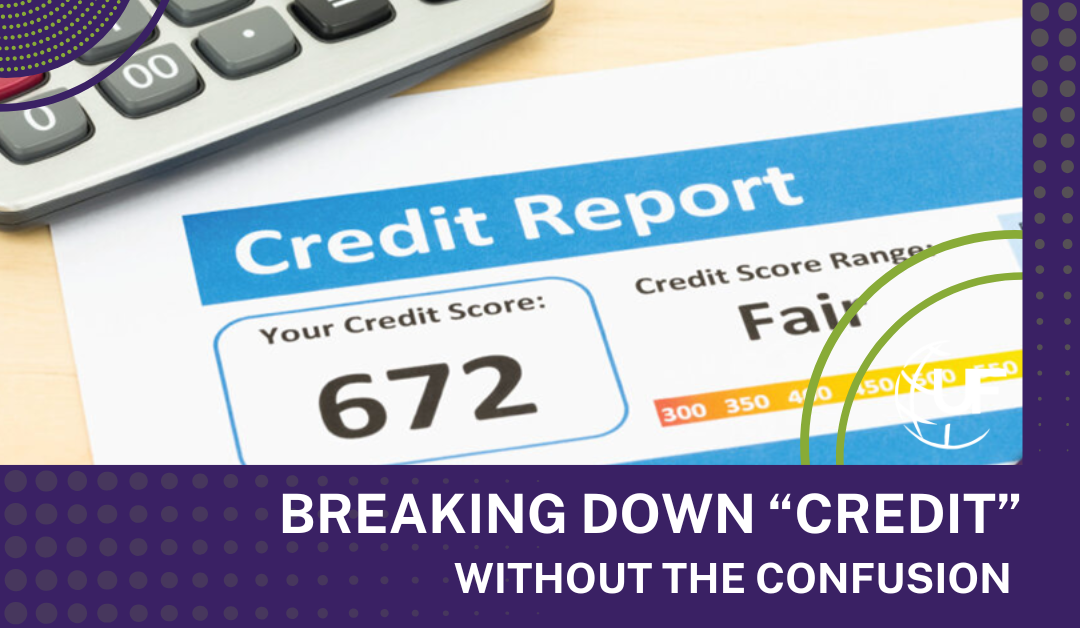
We know “Credit” can be a scary term you hear everywhere (“You need credit to buy a car”, “What’s your credit score?”, “You need to build credit”). Ok, but what even is credit??
We gathered all of the information so that you don’t have to, and we are going to share it with you here; no jargon, no judgement, just facts!
Let’s start with the basics – What is Credit?
To summarize, credit is your financial reputation, providing lenders with insight on if you will pay them back or not. Your credit is calculated using “credit scores”, which are much like the adult version of GPAs. The better you are doing, the higher the score! The scores range from 300-850. Here is a simple chart of what the scores mean.
- 300-579 = Poor
- 580-669 = Fair
- 670-739 = Good
- 740-799 = Very Good
- 800-850 = Excellent

Why does my Credit Score matter?
Since it is a reflection of your financial responsibility, your credit score is the determining factor for many lenders. If you don’t have any credit, or very low credit, it is going to be difficult to get a loan for that car you are looking for or a mortgage for your first house… and if you do, you are going to end up paying a lot of money in interest in the end. So although it may be just a number, it plays a significant role on your chances of getting a loan and better terms on that loan.
So it’s pretty important… now how do I apply this to my credit?
There are 5 primary categories that make up your credit score. Here is what they are, and which ones have the biggest effect on your number.
- Payment History: (35%) – Paying your bills and loans on time
- Amounts Owed: (30%) – How much you owe on your accounts. If you have a credit card or revolving account; how much you are using of the available credit
- Length of Credit History: (15%) – How long ago you opened accounts and time since account activity
- Types of Credit Used: (10%) – The mix of accounts you have, such as revolving and installment; credit cards, auto loans, mortgages, etc.
- New Credit: (10%) – Any new credit that will reflect on your credit report; hard inquiries and recently opened accounts like a credit card or loan
With these in mind, you can build your credit over time and maintain a great score!
Credit card debt is one of the biggest factors today, as the two major players in you credit score, “Payment History” and “Amounts Owed”, can fluctuate significantly if you are not monitoring your credit card balance. Rule of thumb is to only use your credit card if you have the money to pay it off right away, and to only use a max of 30% of your credit card limit at a time. This way, you can keep the payments made on time, keep the balance low, and stay out of debt.
If you have had an account for a long time, it is usually good to try to keep your longest standing account open, as closing it account can decrease your score quite a bit. The reasoning for this is that you are closing out one of your accounts that has built most of your reputation, so you would have to reestablish this through your next oldest account. Sometimes we need to close out these accounts, and that is fine, but knowing the repercussions of closing the account can help you to plan for the right timing to do so, such as not before applying for a loan.
When looking for a loan or credit card, be cautious of how many places you are applying to or who is pulling your credit, as each of these inquiries are going to decrease your score little by little. Before you know it, your credit will have dropped 50 points just for checking out your options.
Credit in Summary
Overall, your credit score is very important if you would like to get a loan or any type of lending, and if you want to make sure you get the best deals and terms on that loan. You can always start out with a secured loan or card to start building credit using your own money. This is a much safer option to get started. From there, as long as you pay your bills in a timely manner, keep credit card/revolving account balances low, and gain a good history with those accounts, you will see your score start to soar (look at that rhyme!). And if you still aren’t sure, chat with one of our representatives, and we will offer resources to guide you in the right direction.
Did U Know?
With your United Financial account, you can easily view your credit score whenever you want right through your mobile app or online banking. Just ask to upgrade your checking to an Elite or Secure, and you are well on your way to a healthier credit score! You can also view your credit report with this so that you can see exactly what lenders see. It even has a credit score tool that allows you to adjust to the goal score you would like to reach, and it will let you know the steps you need to take to achieve it.